Meet Santa Barbara’s Mayoral Candidates
By Natalie MacFarlane
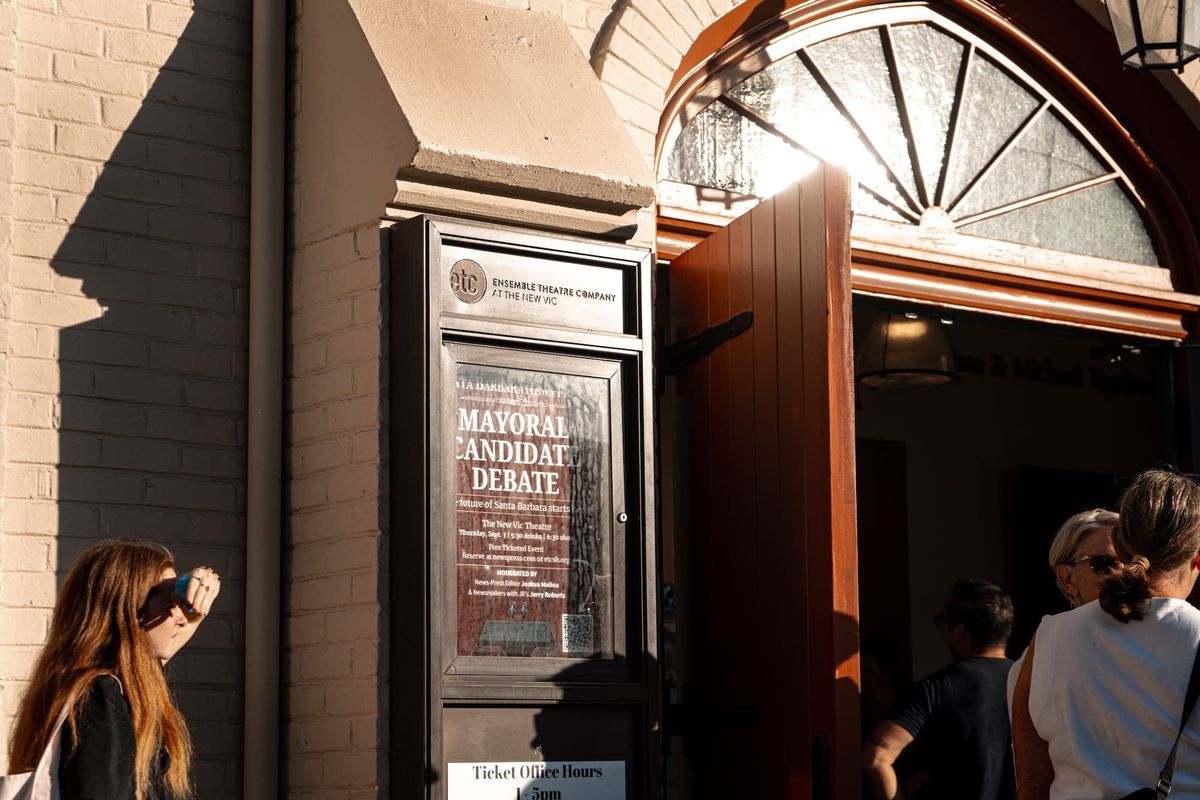
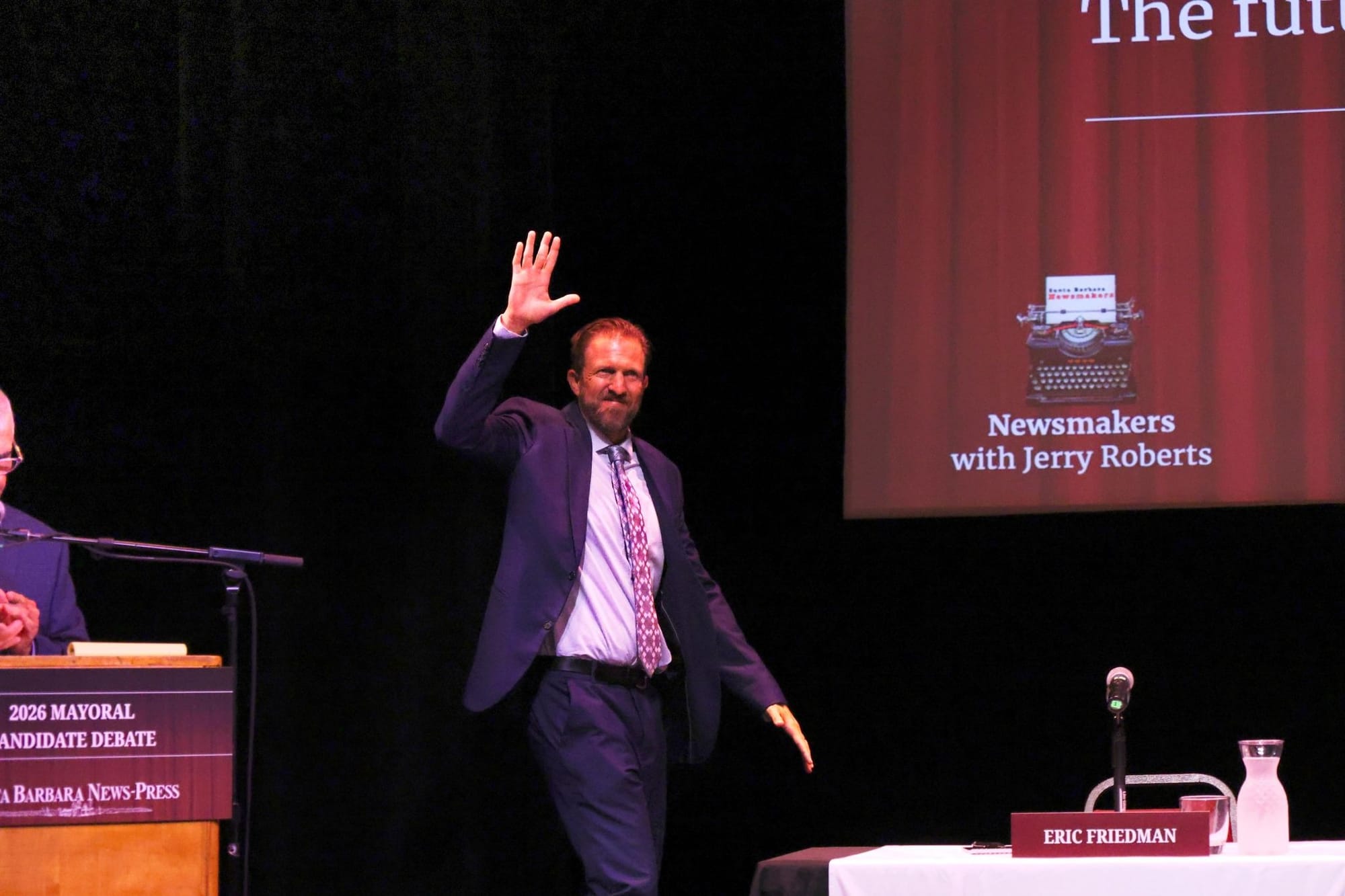
Santa Barbara’s three leading mayoral candidates faced questions and disputed opposing views about the city’s finances, housing, and rent stabilization at the first mayoral debate of the 2026 election season on Sept. 3, hosted by Santa Barbara News-Press Editor Josh Molina and Jerry Roberts of SB Newsmakers.
Councilmember Eric Friedman, Executive Director of First Five Santa Barbara Wendy Sims-Moten, and Councilmember Kristen Sneddon participated in the debate at the New Vic Theater. The election will take place on Nov. 3.
The debate opened with questions about the city’s general fund reserves, which have fallen significantly below the city’s target. The city used a one-time court settlement to balance its budget, prompting questions about how the council reached that point.
Friedman, chair of the Finance Committee, said the city needs to control spending while expanding its revenue base beyond tourism and taxes. “The budget—it’s the single most important thing we do on the City Council because it touches every service that the city delivers.” He pointed to potential growth in the green economy, building trades, and partnerships with UC Santa Barbara as ways to generate additional revenue.
Sims-Moten, a former Santa Barbara Unified School District board member, proposed regular budget study sessions involving city employees and community members, saying residents should understand “where [money’s] coming from, and how limited it is” before decisions are made about spending.
Sneddon, also a City Council member, said the decline in reserves was largely connected to construction costs for the new police station and unexpected inflation. “This is a temporary issue,” she said, arguing that money tied up in construction would eventually become available again.
The candidates also discussed the recently approved State Street Master Plan, a highly controversial, six-year, $96 million project.
Friedman proposed beginning with four blocks rather than immediately undertaking the entire eight-block project. He cited conversations with cities including Boulder, Colorado, and Burlington, Vermont, about their downtown projects. “You have to have a plan, and you have to have community buy-in,” Friedman said, adding that a smaller initial area could make it easier to maintain and police the street and determine future costs.
Sneddon defended the plan as a way to establish a framework for securing outside funding, including transportation grants and philanthropic contributions.
Sims-Moten said she believes the plan needs to move forward, but she has questions about its implementation. She emphasized community involvement and said downtown development should account for families and children as well as increased housing density. Central to the State Street Master Plan—accounting for over 50% of the budget—is upgrading the infrastructure and water systems, making more housing possible.
Rent stabilization produced another major difference among the candidates.
Sneddon supports the proposed ordinance, saying its purpose would be to limit sharp increases in rent while allowing landlords to raise rents to market rates until it becomes vacant. The current proposal would limit annual rent increases to 60% of the Consumer Price Index, with a maximum of 3%. “The idea is to smooth it out instead of having steep spikes,” she said. Sneddon made a public apology to the councilmembers in the room for bringing the policy forward with a two-person memo; she explained the oversight was not writing ‘sample ordinance’ on every single page of the draft.
Friedman opposes the ordinance. He argued that the proposed cap could create enforcement and legal costs and said it could encourage some property owners to sell to corporate investors. He also questioned whether the program’s fees would cover its administrative costs.
Sims-Moten said she supports rent stabilization as a temporary measure but does not favor locking the policy into five years. She said the city should use the time to evaluate how the policy affects renters and property owners.
The candidates were also asked whether the ordinance should be placed before voters. Friedman supported putting it on the ballot. Sims-Moten said she would support a ballot measure if voters were adequately educated about the policy, while Sneddon opposed doing so, arguing that the city needs flexibility to adjust the ordinance based on data collected through a rental registry.
Friedman has been formally endorsed by Congressmember Salud Carbajal, who he worked for during Carbajal’s time as a Supervisor, as well as by current mayor Randy Rowse.
Sneddon has been formally endorsed by the Santa Barbara Democratic Party, multiple former mayors, including Marty Blum and Sheila Lodge, and the majority of the current Board of Supervisors—Supervisors Laura Capps, Roy Lee, and Joan Hartman. The Sierra Club, Santa Barbara Teachers Association, SEIU Local 620, CAUSE Action Fund, and the city firefighters union also endorsed Sneddon.
Sims-Moten has not announced formal endorsements at this time.
Note: Matthew Kilrain, or “Boat Rat Matt,” is also running for mayor of Santa Barbara. He previously ran for mayor in 2021, but did not get elected, and finished sixth out of six candidates. Kilrain has not announced any campaign donations or endorsements at this time.